
Do You Need a Rideshare Accident Lawyer After an Uber or Lyft Crash in Utah?
When a Utah Uber or Lyft crash calls for a rideshare accident lawyer, who pays at each app status, how no-fault rules apply, and what to do after a crash.
// ON THIS PAGE
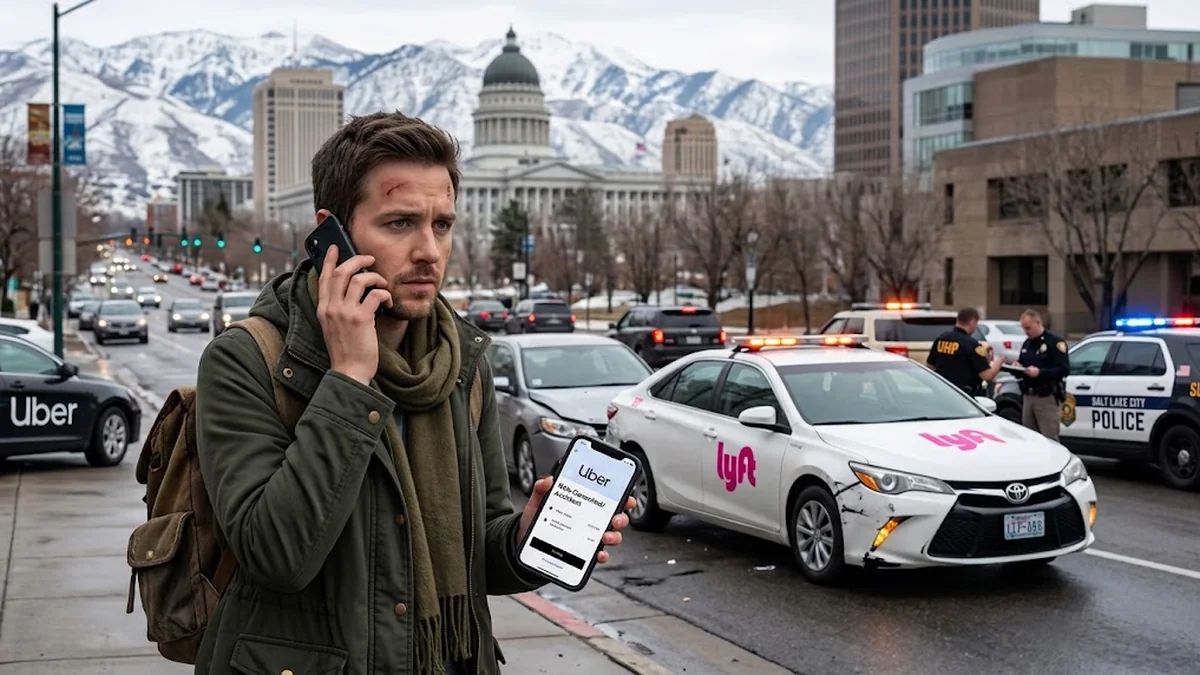
When you book Uber or Lyft, you trust the driver, but sometimes their negligence results in an accident. A rideshare accident in Utah may raise multiple questions in your mind, like which insurer pays? What options do you have?
You need a rideshare accident lawyer depending on the severity of injuries, accident complexity, driver’s app status, and behavior of the insurer. Rideshare accident cases can be complex because they involve multiple insurance policies and company procedures.
This article explains who pays, how Utah law applies, and when a rideshare accident attorney becomes necessary. Keep reading to make an informed decision.
When You Need a Utah Rideshare Accident Lawyer?
Not every rideshare accident is the same; some cause minor injuries, while others result in major injuries. Therefore, you should consider legal help if:
-
Your medical bills are significant or ongoing
-
The rideshare company or an insurer delays, denies, or undervalues your claim.
-
Multiple vehicles were involved, or fault is disputed.
-
Insurance coverage is unclear.
-
You were offered a quick settlement before treatment ended.
On the other hand, you may settle it yourself if:
-
Your injuries are minor.
-
Fault is clear.
-
One insurer is offering fair compensation.
Even then, a safe option is to consult an Uber accident lawyer before signing the release. Injuries like whiplash or soft tissue injuries can appear days or weeks later and can put a financial burden on you in the future.
Who Pays After an Uber or Lyft Crash in Utah?
Utah rideshare companies are controlled by Transportation Network Companies (TNCs). Under law (§ 13-51-108), an Uber or Lyft driver must have primary insurance during a prearranged ride (app is off) and during a waiting period (app is on).
Where applicable, the required coverage includes:
-
Personal injury protection (PIP)
-
Uninsured and underinsured motorist coverage
The coverage generally applies based on the rideshare mobile app status of the driver. See the table below:
| Driver Status | Coverage That Generally Applies |
|---|---|
| App off | Driver’s personal auto policy |
| Waiting for a ride request | Primary liability coverage of at least $50,000 per person, $100,000 per accident, and $30,000 for property damage |
| Ride accepted or passenger on board | Liability coverage of at least $1,000,000 per occurrence, from the company or driver policy |
To confirm Uber or Lyft app status, you need electronic data that is taken from the rideshare company, which does not always release it. A formal request may help obtain these records.
Do Utah No-Fault Rules Affect Your Rideshare Claim?
Yes, it does. Under Utah's modified no-fault system, your own personal injury protection (PIP) coverage ($3000) pays initial medical expenses and lost income, no matter who was at fault. However, it does not cover pain and suffering.
To step outside Utah's no-fault rules, your medical expenses should be more than the statutory minimum limit ($3000). You qualify for a severe injury, fracture, or permanent disability.
You can file a claim against the at-fault driver meeting that specific limit. If the at-fault driver has less or no insurance, your uninsured or underinsured motorist coverage may apply. Your preserved medical records and other evidence can be used if the claim is disputed.
Why Rideshare Accident Claims Get Complicated?
Uber and Lyft categorize drivers as independent contractors. This lets companies and insurers point fingers at each other.
In multi-vehicle accidents involving Uber or Lyft, separate investigations are mostly conducted from each driver's side. Their investigation complicates the case. Usually, drivers are at fault, not passengers. So compensation depends on how fault is shared among drivers.
Other common challenges that complicate the case include:
-
Utah comparative negligence law may limit your recovery based on fault.
-
Early settlements seem great but may not include your future costs.
-
Evidence such as eyewitnesses and security footage may disappear over time.
What to Do After a Utah Rideshare Accident?
After a Utah rideshare accident in Utah, here are the steps you should follow:
-
Primarily, call 911 and report the rideshare accident to the police. Get a copy of the police report.
-
Also, report it to Uber or Lyft through the app.
-
Seek medical assistance, even if your injuries seem mild.
-
When safe, preserve evidence. Take photographs of the vehicles, scene, and your injuries, and collect witness details.
-
Decline a recorded statement until you have legal advice.
-
Call a rideshare accident lawyer to understand your rights and get compensation you truly deserve.
FAQs
How long do you have to file a rideshare injury claim in Utah?
Utah generally allows four years to file a personal injury lawsuit, starting from the crash date. However, if government entities are involved, the time period shortens to one year. Exceptions apply based on circumstances. A missed deadline can end a claim regardless of its merit.
Can I sue Uber or Lyft directly?
Possibly. Because drivers are classified as independent contractors, liability against the company depends on the facts, but the company’s insurance coverage is often the main source of recovery.
Does Utah's no-fault system mean I cannot sue?
No, Utah’s no-fault law does not mean you cannot sue; you may pursue the at-fault party for damages beyond PIP if your case meets specific legal limits under Utah law.
What if the driver had the app on but no passenger?
If the Uber or Lyft driver app is on but there is no passenger inside, Utah law requires primary liability coverage during that period. The minimums are $50,000 per person, $100,000 per accident, and $30,000 for property damage. These limits are lower than the $1 million that applies during a ride.
Conclusion
A rideshare accident in Utah is not as simple as a car accident. It can involve multiple insurance policies, disputed liability, and unexpected medical expenses. If you are injured in a Utah rideshare accident, you need a lawyer to understand your rights and get compensation you deserve. Contact Hernandez Injury Law for a free consultation. The quick you speak to them, the strong your case will be.
For more practical guides on health, money and everyday life, explore the rest of Internet Chicks.