
Internet Chicks Culture and Evolution: How Online Female Creators Built an Industry
Four eras of female creator culture, from unpaid blogging in 1999 to a $250 billion industry — the infrastructure that unlocked each phase, and the economics that still haven't caught up.
// ON THIS PAGE
- The Four Eras at a Glance
- 1999–2005: Blogs, Forums and the First Personal Brands
- 2005–2012: Video and Visual Platforms Arrive
- 2012–2019: Monetization Becomes Infrastructure
- 2020–2026: The Professional Era
- What Changed in the Culture, Not Just the Tech
- The Numbers Behind the Shift
- Platform Power and Its Limits
- The Costs Nobody Counted
- Where Internet Chicks Culture Is Heading
- The Short Version
- Frequently Asked Questions
Twenty-five years ago a woman writing online had no way to get paid for it. Today roughly 50 million people worldwide earn something from creating and women are the clear majority of them. That shift didn't happen in one leap. It happened in four distinct phases, each one unlocked by a specific piece of infrastructure. This page tracks that arc.
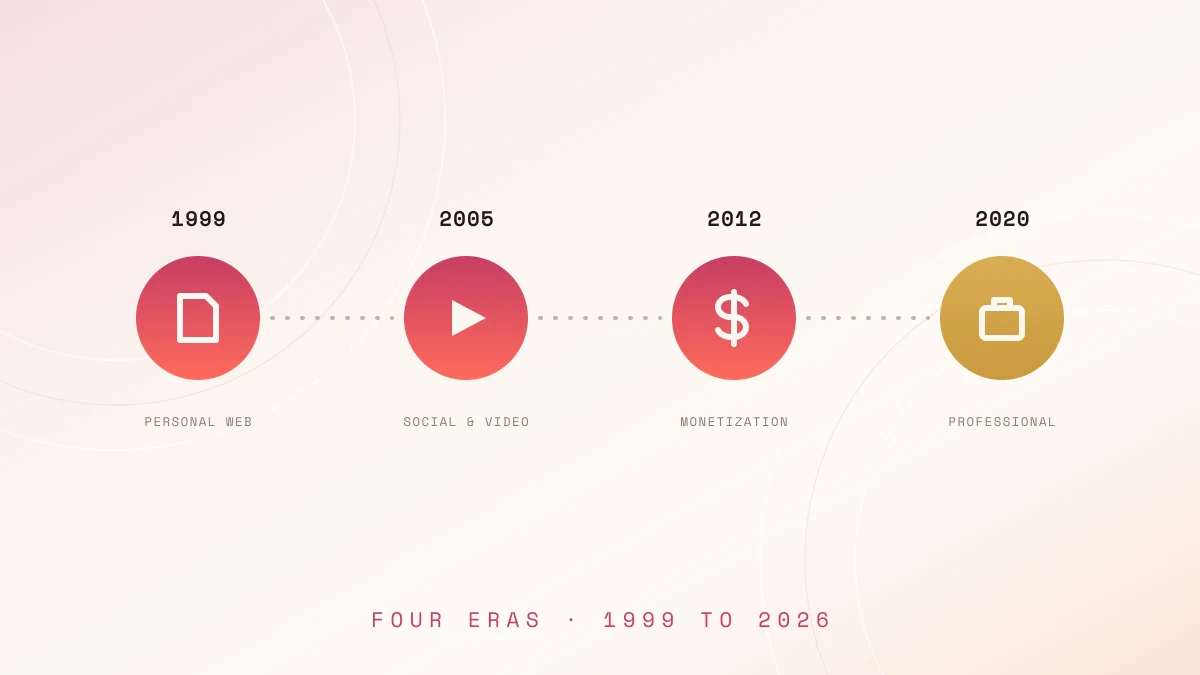
The Four Eras at a Glance
| Era | Years | Dominant format | How money arrived |
|---|---|---|---|
| Personal web | 1999–2005 | Blogs, forums, LiveJournal | Almost none — banner ads at best |
| Social and video | 2005–2012 | YouTube videos, photo feeds | Platform ad splits begin |
| Monetization infrastructure | 2012–2019 | Instagram, Vine, Twitch, newsletters | Brand deals, subscriptions, memberships |
| Professional era | 2020–2026 | Short-form video, live, owned channels | Diversified revenue, teams, businesses |
1999–2005: Blogs, Forums and the First Personal Brands
Blogger launched in 1999 and removed the only real barrier: you no longer needed to know HTML to publish. LiveJournal and personal sites followed. Women wrote about their lives, their work and their interests to audiences in the hundreds.
Two features of this era shaped everything after it.
The audience relationship was direct. No algorithm sat in the middle. Readers bookmarked a URL and came back. That's the purest version of audience ownership and creators have been trying to get back to it ever since.
There was no money. A handful of bloggers sold banner ads. Most published for years with zero income. Writing online was a hobby that occasionally became a journalism career, and nothing else.
2005–2012: Video and Visual Platforms Arrive
YouTube launched in February 2005. In 2007 it introduced the Partner Program, which let creators share advertising revenue. That single change turned publishing from a hobby into a possible income.
Instagram arrived in October 2010 and made visual storytelling mobile-first. Twitch spun out in 2011 and gave live streamers a home. Tumblr, launched 2007, became the engine room for internet aesthetics.
Beauty tutorials were the breakout category and the reason is practical. A camera, a mirror and good lighting were enough. No crew, no studio, no gatekeeper. Women who were good on camera and consistent could build six-figure audiences from a bedroom.
The culture of this era was still amateur in tone. Production values were low on purpose. Audiences rewarded people who seemed like them rather than people who seemed polished.
2012–2019: Monetization Becomes Infrastructure
This is the decade the business model stopped being improvised.
Patreon launched in 2013 and proved audiences would pay directly, monthly, with no advertiser involved. Vine arrived the same year, produced a generation of short-form stars and shut down in 2017 — a lesson about platform risk that creators still cite. Substack launched in 2017 and made paid newsletters a standard option. Musical.ly, launched 2014, merged into TikTok in August 2018.
Three cultural changes mattered more than the technology.
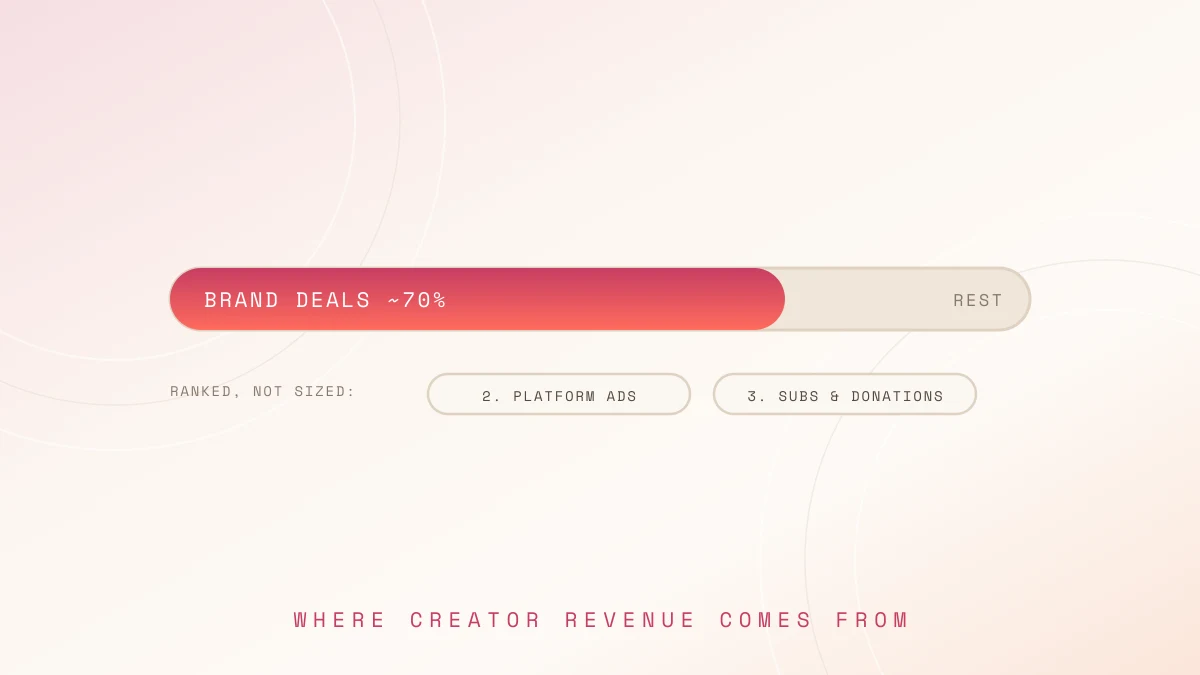
Brand deals became the primary income. Not ads, not subscriptions. Direct deals between a company and a creator. Goldman Sachs Research estimates brand deals account for roughly 70% of creator revenue, with platform ad payouts second and subscriptions and donations third, in its April 2023 analysis.
Media kits and rate cards appeared. Creators started pricing their work instead of accepting whatever was offered. Pricing knowledge spread through private groups and then publicly.
Disclosure became an issue. As paid posts multiplied, regulators and audiences both pushed back on undisclosed sponsorship. Disclosure went from optional to expected.
2020–2026: The Professional Era
Short-form video took over. Instagram launched Reels in 2020, YouTube followed with Shorts and TikTok became the default discovery engine for new creators.
Platform payout programs churned through this period. TikTok retired its original Creator Fund and replaced it with the Creativity Program, later renamed the Creator Rewards Program, with different eligibility and payout math. Creators who built a business on one payout scheme learned that schemes get replaced.
The bigger change was structural. Successful creators stopped working alone. Editors, managers, lawyers and accountants entered the picture. A one-person channel became a company with contractors.
A second structural change was UGC. Brands started paying creators to produce footage the brand itself would publish. Follower count stopped being the entry requirement. Someone with 800 followers and good camera instincts could earn from day one, which opened the field to people who'd never go viral.
What Changed in the Culture, Not Just the Tech
Platform history is the easy part to document. The cultural shifts are what actually changed how this work feels.
From Audience to Community
Early creators broadcast. Current creators convene. Discord servers, close-friends stories, members-only chats and comment culture turned one-way publishing into something closer to hosting.
The practical effect is retention. A community follows a creator across platforms. An audience doesn't.
From Money Secrecy to Money Transparency
For a decade creators didn't discuss rates. Brands benefited and creators underpriced themselves badly.
That broke down. Rate sharing, public earnings breakdowns and crowdsourced pricing data became normal. Transparency is the single biggest reason newer creators get paid closer to their worth.
From Virality to Niche Authority
Chasing reach dominated the 2010s. It stopped working as a strategy once every feed became short video.
The current logic is narrower. A creator with 20,000 engaged followers in a specific niche often out-earns one with 200,000 general followers. Advertisers buy relevance now, not raw numbers.
The Numbers Behind the Shift
The scale is documented and worth stating plainly.
| Measure | Figure | Source |
|---|---|---|
| Creator economy size | $250 billion, projected to approach $480 billion by 2027 | Goldman Sachs Research, April 2023 |
| Global creators | ~50 million, growing 10–20% a year | Goldman Sachs Research |
| Creators earning over $100k | About 4% | Goldman Sachs Research |
| Share of influencers who are women | 72% in 2024, up from 70% in 2023 | Collabstr, via Fast Company |
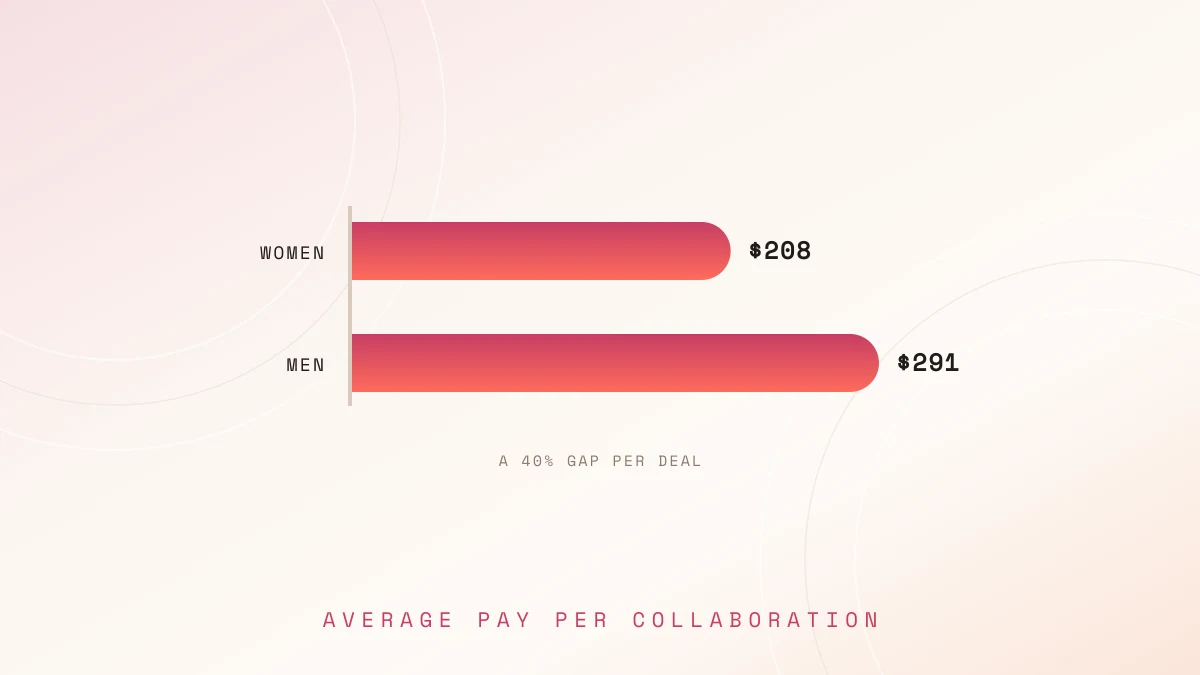
| Average pay per collaboration | $208 for women, $291 for men | Collabstr, 15,000+ collaborations |
Two of those numbers deserve attention together.
Women are roughly three-quarters of the field and they earn 40% less per collaboration than men. Collabstr's reading is that oversupply drives it — so many women compete for the same deals that rates fall and bargaining power weakens. The gap narrows as follower count rises, which tells you it's a market-power problem rather than a talent one.
The 4% figure is the other hard truth. Most creators don't earn a living from this. Goldman Sachs expects that share to hold steady even as the total market grows, which means the industry expanding doesn't automatically mean more people making it.
Platform Power and Its Limits
Every era of this history ended because a platform changed something.
Vine's shutdown in 2017 erased an entire creator class overnight. TikTok's payout program has been restructured and renamed. Instagram has reweighted its feed repeatedly, each time redistributing reach between creators who did nothing differently.
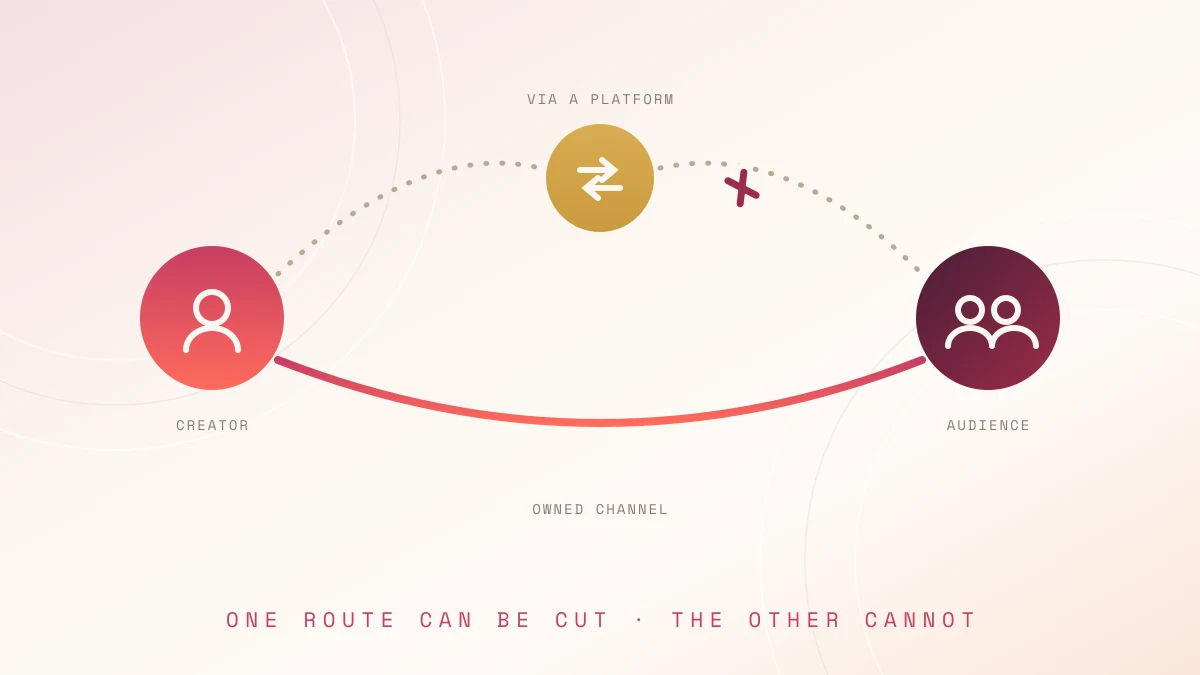
Creators learned two defenses. The first is diversification across platforms so no single algorithm change is fatal. The second is owned channels — email lists, communities and direct sales — where the relationship can't be downranked.
Neither defense is complete. Discovery still happens on platforms and platforms still set the terms.
The Costs Nobody Counted
The economic story is only half of it.
Harassment is structural, not incidental. Pew Research Center found 33% of women under 35 had experienced online sexual harassment, compared with 11% of men in that age bracket. Women who'd been harassed were more than twice as likely as men to say they were extremely or very upset by it — 34% against 14%. Those figures come from a survey of 10,093 U.S. adults in September 2020, published January 2021.
Income is unstable by design. Brand deal revenue is project-based. Platform payouts move with ad markets. A strong quarter guarantees nothing about the next one.
Burnout is the common exit. The job requires constant output on platforms that punish gaps. Creators who stop posting lose reach so rest carries a direct cost.
Safety practices became a professional skill rather than an afterthought.
Where Internet Chicks Culture Is Heading
Four shifts are already underway.
AI changes production, not the relationship. Editing, captioning, thumbnails and scripting are getting faster. What AI can't manufacture is a reason an audience trusts a specific person, which pushes the value further toward personality and judgment.
Niches keep narrowing. General lifestyle content is the most crowded category on the internet. Specific expertise is where new creators break through.
Owned channels keep gaining ground. Email lists, apps and communities grow in importance every time a platform changes its rules.
Creator businesses look like companies. Product lines, employees, equity. The ceiling moved from "good income" to "sellable asset."
The Short Version
Internet chicks culture evolved in four stages: a hobby with no money, a platform with ad revenue, an infrastructure of brand deals and subscriptions, and finally an industry with teams and balance sheets.
The infrastructure matured faster than the economics did. A $480 billion market where 4% of participants clear $100,000 and the majority gender earns 40% less per deal isn't a finished story. It's an industry still working out who gets paid.
Frequently Asked Questions
When did internet chicks culture start?
Around 1999, when Blogger made publishing possible without technical skill. Income arrived later, with YouTube's Partner Program in 2007.
What was the biggest turning point in the evolution of internet chicks?
The arrival of direct monetization. Patreon in 2013 and Substack in 2017 proved audiences would pay creators directly, with no advertiser in between.
Why do women dominate the creator economy?
Women made up 72% of influencers in 2024. The categories that monetized earliest — beauty, lifestyle, fashion, wellness — had largely female audiences and creators and that head start compounded.
Do most internet chicks make a full-time income?
No. Goldman Sachs Research estimates about 4% of global creators earn more than $100,000 a year. Most earn supplemental income or nothing.
How has short-form video changed creator culture?
It made discovery faster and reach less predictable. New creators grow quicker than before but reach swings hard with algorithm changes, which pushed creators toward owned channels.
What is the biggest risk in a creator career today?
Platform dependence. Vine's 2017 shutdown and repeated payout program changes show how fast a revenue source can disappear through no fault of the creator.